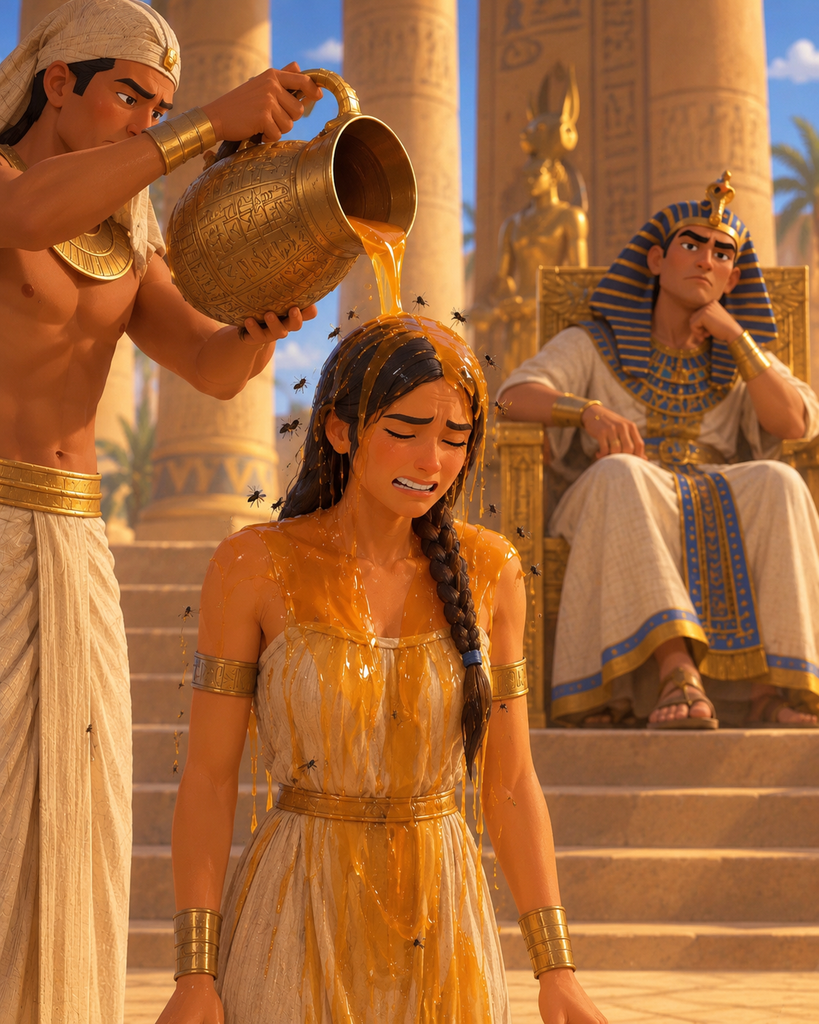
In ancient Egypt, Pharaoh Pepi II Neferkare was associated with a remarkable story about an unusual method of keeping flies away from the royal court. According to history, the pharaoh used honey-covered servants as human fly traps, directing the insects toward them rather than allowing them to disturb his royal presence.
The method reportedly involved smearing honey over the exposed bodies of servants and positioning them near the pharaoh. The sweet substance attracted flies, drawing the insects toward the honey-coated servants. As the flies gathered on their bodies, the pharaoh could remain relatively undisturbed by the pests.
The individuals assigned this task would have faced considerable discomfort. Honey spread across their skin would attract increasing numbers of flies, which would land on their arms, shoulders, faces, and other exposed areas. The sticky substance made the insects difficult to brush away, while moving too much could interfere with their purpose as living traps. Their role, according to the story, was to attract the flies and keep them occupied so that the ruler would not have to endure the same nuisance.
Pepi II ruled Egypt during the Sixth Dynasty of the Old Kingdom, a period when the pharaoh occupied the highest position in Egyptian society. The royal household maintained numerous attendants responsible for the ruler’s personal needs and comfort. The story of the honey-covered servants portrays the extreme privileges associated with the throne, suggesting that even an ordinary irritation could be transferred to people serving the king.
Comments